An article was published recently in Marathi local magazine by Suhas Sonwane based on daily Loksatta. The following is a gist of it, translated from Marathi.
Mr. Babasaheb Gawande, the founder president of an Organization of Marathas from Bombay called "Maratha Mandir" was a close friend of Dr. Ambedkar. Mr. Gawande asked Dr. Ambedkar, who was then a Law Minister in Nehru Cabinet in 1947, for a message for the Maratha people to be published in the Souvenir of "Maratha Mandir". Ambedkar declined saying that he had no relation with the Organization or the Marathas, but on persistent insistence, a message was given and published in the souvenir on 23rd March 1947. But unfortunately that special issue is not available in the office of the Organization today. But it was made available by Shri Vijay Survade recently and was undocumented till now.
Dr. Ambedkar said:
"This principle will apply not only to Marathas but all Backward Castes. If they do not wish to be under the thumb of others they should concentrate on two things, one is politics and the other is education."
"One thing I like to impress on you is that the community can live in peace only when it has enough moral but indirect pressure over the rulers. Even if a community is numerically weak, it can keep its pressure over the rulers and create its dominance as is seen by the example of status of present day Brahmins in India. It is essential that such a pressure is maintained, as without it, the aims and policies of the state can not have proper direction, on which depends the development and progress of the state."
"At the same time, it must not be forgotten that education is also important. Not only elementary education but higher education is most essential to keep ahead in competition of communities in their progress."
"Higher education, in my opinion, means that education, which can enable you to occupy the strategically important places in State administration. Brahmins had to face a lot of opposition and obstacles, but they are overcoming these and progressing ahead."
"I can not forget, rather I am sad, that many people do not realize that the Caste system is existing in India for centuries because of inequality and a wide gulf of difference in education, and they have forgotten that it is likely to continue for some centuries to come. This gulf between the education of Brahmins and non-Brahmins will not end just by primary and secondary education. The difference in status between these can only be reduced by higher education. Some non-Brahmins must get highly educated and occupy the strategically important places, which has remained the monopoly of Brahmins since long. I think this is the duty of the State. If the Govt. can not do it, institutions like "Maratha Mandir" must undertake this task."
"I must emphasize one point here that middle class tries to compare itself with the highly educated and well placed and well to do community, whereas lower class all over the world has same fault. The middle class is not as liberal as upper one, and has no ideology as lower one, which makes it enemy of both the classes. The middle class Marathas of Maharashtra also have this fault. They have only two ways out, either to join hands with upper classes and prevent the lower classes from progress, and the other is to join hands with lower classes and both together destroy the upper class power coming against the progress of both. There was a time, they used to be with lower classes, now they seem to be with the upper class. It is for them to decide which way to go. The future of not only Indian masses but also their own future depends upon what decision the Maratha leaders take. As a matter of fact it all should be left to the skill and wisdom of the leaders of Marathas. But there seems to be a lack of such wise leadership among the Marathas."
What he said about Marathas, equally applies to all OBCs, and still holds true after half a century. Dr. Ambedkar wrote much to educate the OBCs. It is only now that OBCs are awakening gradually. It must not be forgotten that the future of this country depends on them.
Wednesday, January 21, 2009


Monday, January 5, 2009
Friday, January 2, 2009
NRI's tributes to Dr. B.R Ambedkar
 In remembrance of 52nd Mahaparinirvan Din of Dr. B. R Ambedkar, on December 6th 2008 NRIs in bay area paid tributes in memory of Dr. B.R Ambedkar and his works and contributions for India.
Pravasa Chiranjeevi Organization instrumented in organizing this meeting inviting group of over 40 NRIs Software Professionals Engineers, Attorneys, Doctors gathered in Sunnyvale -Bay Area, CA Dr. BR Ambedkar photo was offered with flowers and paid tributes to Dr. Balasheb, The group also paid tributes to the victims of the Mumbai terrorist attacks and maintained 2 minutes of silence.
Srinivasa Manapragada Vice President and Official Spokesman of Pravasa Chiranjeevi Organization invited the gathering remembered about Dr. Bhimrao Ramji Ambedkar and spoke the need has come to the Political Parties to work for the unity and work in involving the weaker sections in leading the country and creation of social justice, quoting the quotation of Dr. Balasheb " Political tyranny is nothing compared to the social tyranny and a reformer who defies society is a more courageous man than a politician who defies Government". Dr. Ambedkar who backed the word CHANGE and is from weaker section was chiefly responsible for drafting of The Constitution of India and a champion of Human Rights
Buchanna Gajula said "Dr B.R. Ambedkar predicted in 1954 that there could be potential terrorism from Pakistan and China". Then leaders would have taken enough measures to prevent terrorism, we would have lived in a better society. In recent Mumbai attacks govt. took about 9 hours to react to the incident. This shows failure of current leadership. The need of the hour for the country is patriotic, young and dynamic leadership to safeguard our motherland and overall development. While remembering Obama's victory, change is inevitable that the next Prime Minister would be from weaker section society as dreamed by Dr. B.R. Ambedkar".
Vijay Chavva, A noted NRI in Bay Area said Dr. Bhimrao Ambedkar was the architect of India's Constitution, an erudite scholar of philosophy, economics and political science and one of India's leading crusaders for social justice. His inspirational life story has motivated millions of Indians, particularly from the Dalit community to break the shackles of casteism in Indian society. Ambedkar was a prolific writer of political texts, a social democrat and a strict constitutionalist. His legacy is celebrated by millions of the underprivileged in the country today, who see Ambedkar political contributions as the most important reason for their struggles in achieving dignity and overcoming casteism prejudice. He is remembered for his various struggles against untouchables. His role in building India's Constitution, where he envisaged sets of constitutional guarantees, rights and civil liberties, besides clauses aimed at establishing equality through affirmative action, is indeed seminal.
Vunguru Laxmaiah retired employee of ECIL, Hyderabad and Political Contributor was on visit to USA and paid tribute. He said "Dr. B.R. Ambedkar played key role for the development of the weaker and downtrodden sections of the society". And talked about present percentage of participation in politics by the weaker section representatives
Speaking on this occasion Guest Speaker Ram Kumar, Director of Ambedkar International Mission, USA remembered key events of Dr. B.R. Ambedkar. He reminded that Babashaheb was the father of Indian Democracy and his contributions to our country where every body gets equal right specially "Hindu Woman Act" for providing equal right to Hindu Women, reservation for weaker to provide them representation in every sphere of country development and help India develop uniformly. Ram Kumar also showed concern that due to biased reasons against him, Babashaheb has been known as weaker section reservation leader only inspite of accepting the truth that he is Nava Bharath Nirman leader and belongs to everybody and as his statues are more than any body in India, now world is recognizing his extraordinary contribution to world and for example Romania people are following Ambedkarism, Black Movement in America started after getting inspired by Baba Saheb. Dr. B. R Ambedkar ideas/literature was adopted by world leaders to bring change in helping weaker sections of the society.
Suresh Vuyyuru said "everyone to get unite and works towards the unity of the country forgetting the caste and creed. Palabindala Biksham spoke about the social justice and how it has become topic of the time based on the seeding done by Ambedkar decades ago.
Thursday, January 1, 2009
Dr. B.R. Ambedkar Code
Dr. Babasaheb Ambedkar was a veritable phenomenon of the 20th century. There may scarcely be a parallel indeed in the annals of human history to the saga of struggle that his life represented. Born in the family of ‘untouchables’, he could nonetheless scale the highest peak of scholarship, leadership and statesmanship. When the Hindu caste system had ordained severe punishment for his community for so much as thirsting for education and knowledge, he had secured the highest academic honours from the most prestigious universities of the world and thus conclusively refuted the basic premise of intrinsic inferiority or superiority based on one’s birth proffered by the caste system. For over two millennia, the Hindu caste system had perfected itself into a self-sustaining mechanism of exploitation that fossilised all the social relationship into a caste cauldron and in process had completely robbed the labouring masses like untouchables of their human identity. He had reclaimed for them this identity, breathed political consciousness and galvanised them into a vibrant movement that changed the course of Indian politics. In the epic battle against the vile and complex caste system, he had single-handedly performed the roles of a researcher, a theoretician, an organiser, a journalist, a politician, a leader etc. against all possible odds and still come out with outstanding results. He was among few who dared the contemporary might of the then Indian National Congress and Mahatma Gandhi and stood his grounds even in the face of threats to his life. At symbolical plane, Manu who was the evil enemy in this epic battle as the code giver for the caste system, had to concede defeat and make place for Ambedkar code in the form of the Constitution of India. Eventually, he enacted the biggest religious conversion in the history that ensconced him with his western attire at the place alongside Buddha as the spiritual deity for his people.
Tuesday, December 30, 2008

Monday, December 29, 2008

Thus Spoke Ambedkar : Quotations of Dr. Ambedkar
 On 26th Jan. 1950,India will be an independent country. What would happen to her independence? Will she maintain or will she lose it again? This is the first thought that comes to my mind.It is not that India was never an independent country. The point is that she once lost the independence she had. Will she lose it a second time? It is this thought which makes makes me most anxious for the future. What perturbs me greatly is the fact that not only India has once beforelost her independence, but she lost it by treachery of some of her own people...
Will history repeat itself ?It is this thought which fills me with anxiety. This anxiety is deepened by the realization of the fact that in addition to our old enemies in the form of castes &creeds, we are going to have many political parties with diverse & opposing political creeds. Will Indians place the country above their creed or creed above their country? I do not know, But this much is certain that if the parties place creed above country, our independence will be put in jeopardy a second time & probably be lost forever. This eventuality we all must resolutely guard against. We must be determined to defend our independence with the last drop of our blood!
Friday, December 26, 2008
Ambedkar’s squabbling children
DHARMENDRA JORE
Posted: Apr 02, 2004 at 0000 hrs IST
MUMBAI It's time to feel the Republican blues in Maharashtra. In the state where Dr Babasaheb Ambedkar started the Dalit movement in the late 40s, the Republican Party of India (RPI) forum—now split into over 10 factions (at last count)—is still a force to reckon with. The unified RPI can do a Uttar Pradesh in Maharashtra if a sizeable chunk of 38 per cent OBCs favour it.
Their fixed vote-bank—Buddhists (6.39 per cent)—and a large chunk of the SCs (11.09 per cent) will certainly make its task easier.
However, given their individual records of being fickle, key figures from within the community will make alliance-building a tricky task for the big parties.
The Congress and the Nationalist Congress Party (NCP) have been successful in keeping the ‘three musketeers’—R S Gavai, Ramdas Athavale (sitting MP from Pandharpur) and Jogendra Kawade with them. The trio, who represent three different factions, have now rallied together under one umbrella—the Republican Federation—to forge a Congress-NCP-RPI front.
In its unified avatar, the RPI had won four seats in the 1998 elections from the general category. ‘‘We are confident of repeating our performance,’’ Gavai told The Indian Express in a telephone interview from Amravati, the seat in Vidarbha he contested and lost last time. His current ally Kawade too had lost. Athavale was the only RPI representative to reach Lok Sabha in 1999.
However, it is the fourth and foremost of them all, Prakash Ambedkar, the sitting MP from Akola (another general segment), who holds the key, perhaps wielding more influence by virtue of being the grandson of Dr Babasaheb Ambedkar. Ambedkar, who broke away from the unified RPI and Congress-NCP, has floated the Bharatiya Republican Party-Bahujan Mahasangh.
This time Ambedkar kept Congressmen waiting when the Akola seat was ‘offered’ to him. But he did not entertain the BJP. ‘‘I did not approach them. And why should I join them when I’m able win on my own,’’ Ambedkar said, speaking from Akola. Having won four assembly seats (apart from his own Lok Sabha seat) last time, he is the man who could be the deciding factor.
But Ambedkar holds a grudge against Congress as it had lured three of his MLAs into its fold during the Vilasrao Deshmukh regime.
‘‘We are fighting the election on issues,’’ said Ambedkar, who believes the Republican party was never the party of Buddhists alone. ‘‘We are people from all castes and religions.’’
Gavai, however, refuses to buy Ambedkar’s argument and blames him for placing his own interests above the broad RPI agenda. Gavai says Ambedkar has prevented the various factions from rallying together under a common banner.
‘‘Everybody knows he (Ambedkar) is a vote-eater. He’s more interested in satisfying his own ego than working for a common cause.’’
Apart from the Congress-NCP combine, the BJP too has been looking for some convenient alliances amidst this mess. Its soft corner for Prakash Ambedkar is a well-known fact.
‘‘The RPI leaders may not be with us physically but the masses are with us,’’ said State BJP chief Gopinath Munde, who is trying hard to take the party to OBCs and Dalit leaders and masses alike.
Posted: Apr 02, 2004 at 0000 hrs IST
MUMBAI It's time to feel the Republican blues in Maharashtra. In the state where Dr Babasaheb Ambedkar started the Dalit movement in the late 40s, the Republican Party of India (RPI) forum—now split into over 10 factions (at last count)—is still a force to reckon with. The unified RPI can do a Uttar Pradesh in Maharashtra if a sizeable chunk of 38 per cent OBCs favour it.
Their fixed vote-bank—Buddhists (6.39 per cent)—and a large chunk of the SCs (11.09 per cent) will certainly make its task easier.
However, given their individual records of being fickle, key figures from within the community will make alliance-building a tricky task for the big parties.
The Congress and the Nationalist Congress Party (NCP) have been successful in keeping the ‘three musketeers’—R S Gavai, Ramdas Athavale (sitting MP from Pandharpur) and Jogendra Kawade with them. The trio, who represent three different factions, have now rallied together under one umbrella—the Republican Federation—to forge a Congress-NCP-RPI front.
In its unified avatar, the RPI had won four seats in the 1998 elections from the general category. ‘‘We are confident of repeating our performance,’’ Gavai told The Indian Express in a telephone interview from Amravati, the seat in Vidarbha he contested and lost last time. His current ally Kawade too had lost. Athavale was the only RPI representative to reach Lok Sabha in 1999.
However, it is the fourth and foremost of them all, Prakash Ambedkar, the sitting MP from Akola (another general segment), who holds the key, perhaps wielding more influence by virtue of being the grandson of Dr Babasaheb Ambedkar. Ambedkar, who broke away from the unified RPI and Congress-NCP, has floated the Bharatiya Republican Party-Bahujan Mahasangh.
This time Ambedkar kept Congressmen waiting when the Akola seat was ‘offered’ to him. But he did not entertain the BJP. ‘‘I did not approach them. And why should I join them when I’m able win on my own,’’ Ambedkar said, speaking from Akola. Having won four assembly seats (apart from his own Lok Sabha seat) last time, he is the man who could be the deciding factor.
But Ambedkar holds a grudge against Congress as it had lured three of his MLAs into its fold during the Vilasrao Deshmukh regime.
‘‘We are fighting the election on issues,’’ said Ambedkar, who believes the Republican party was never the party of Buddhists alone. ‘‘We are people from all castes and religions.’’
Gavai, however, refuses to buy Ambedkar’s argument and blames him for placing his own interests above the broad RPI agenda. Gavai says Ambedkar has prevented the various factions from rallying together under a common banner.
‘‘Everybody knows he (Ambedkar) is a vote-eater. He’s more interested in satisfying his own ego than working for a common cause.’’
Apart from the Congress-NCP combine, the BJP too has been looking for some convenient alliances amidst this mess. Its soft corner for Prakash Ambedkar is a well-known fact.
‘‘The RPI leaders may not be with us physically but the masses are with us,’’ said State BJP chief Gopinath Munde, who is trying hard to take the party to OBCs and Dalit leaders and masses alike.
Thursday, December 25, 2008
A Scene from Ambedkar
This is a scene from the movie,Ambedkar which had won Mammootty National Award for Best Actor. The scene depicts the harassments Ambedkar had to undergo as he was a low caste.
Wednesday, December 24, 2008
Bahujan Samaj Party of Dr. B. R. Ambedkar
Bahujan Samaj Party is considered as one of the foremost national political parties in India with socialist leanings. At the time of its formation, the party was established with the aim of representing Bahujans (BC, SC, ST & Minorities), who are believed by few to be at the bottom of the Indian caste system. The ideology of Bahujan Samaj Party, `Dalit Socialism`, is enthused from the philosophy of Dr. B. R. Ambedkar (father of the contitution). Keeping these ideologies in mind the high-profile charismatic leader Kanshi Ram established the Bahujan Samaj Party In 1984.
 Elephant is the official party symbol of the BSP. It is mainly based in the Indian state of Uttar Pradesh. The party has formed state government in its native state a number of times. BSP had 14 members out of 545 members in the 13th Lok Sabha (1999-2004), wherein the membership raised to 19 in the 14th Lok Sabha. This is testimony of the surging popularity of the party. After Kansi Ram, the post of the president is presently adorned by Mayawati Kumari. Mayawati is associated with the party for a long period of time.
BSP established itself the single majority party from the year 1991, after the state assembly election held on 11th May 2007. It took 15 years for BSP to win a clean-sweep in India`s most populated state, Uttar Pradesh. Bahujan Samaj Party became the single largest party with 206 seats out of 403 seats in the state assembly. Mayawati, President of the party, became the new Chief Minister of UP for the 4th term. Along with 50 ministers (cabinet and state rank) she took oath as the chief minister at Rajbhawan in the state capital Lucknow. The party also has a student wing namely, BSSF-Bahujan Samaj Students Forum. Bahujan Samaj Party also have their own publication called- Adil Jafri and Mayayug. The post of general secretary is held by
Elephant is the official party symbol of the BSP. It is mainly based in the Indian state of Uttar Pradesh. The party has formed state government in its native state a number of times. BSP had 14 members out of 545 members in the 13th Lok Sabha (1999-2004), wherein the membership raised to 19 in the 14th Lok Sabha. This is testimony of the surging popularity of the party. After Kansi Ram, the post of the president is presently adorned by Mayawati Kumari. Mayawati is associated with the party for a long period of time.BSP established itself the single majority party from the year 1991, after the state assembly election held on 11th May 2007. It took 15 years for BSP to win a clean-sweep in India`s most populated state, Uttar Pradesh. Bahujan Samaj Party became the single largest party with 206 seats out of 403 seats in the state assembly. Mayawati, President of the party, became the new Chief Minister of UP for the 4th term. Along with 50 ministers (cabinet and state rank) she took oath as the chief minister at Rajbhawan in the state capital Lucknow. The party also has a student wing namely, BSSF-Bahujan Samaj Students Forum. Bahujan Samaj Party also have their own publication called- Adil Jafri and Mayayug. The post of general secretary is held by
Tuesday, December 23, 2008
B.r. Ambedkar:a Crusader For Equality - by H D Sharma
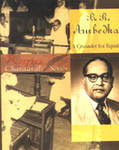
Born an untouchable in a caste ridden Hindu society, he is revered for his ceaseless struggle for equality and justice.
H.D. Sharma was educated in the Universities of Punjab, Delhi and Michigan. He was the recipient of the prestigious Fulbright scholarship twice. He has worked as a librarian and taught library science in universities in India and abroad. He has also authored or edited a number of books.
Monday, December 22, 2008
Ambedkar Jayanti Architect of Indian Constitution and also known as Father of Indian Constitution...
 Dr. Bhimrao Ramji Ambedkar or simply B.R. Ambedkar was born on April 14, 1891 at MHOW (Military Headquarter of War) in Madhya Pradesh. He was the architect of Indian Constitution and is also known as the “Father of Indian Constitution”. He had dedicated his entire life for the upliftment of the deprived section of the society. Hence many Indians and even people from other countries revere him as a great social reformer. He also played a significant role in India’s freedom struggle.
Dr. Ambedkar was one of the first 'untouchables' to obtain a college education in India. He went on to United States and England to pursue higher studies, where he earned a law degree and multiple doctorates for his study and research in law, economics and political science. Returning home as a famous scholar, Ambedkar practiced law for a few years before he began publishing journals advocating political rights and social freedom for India's untouchables.
Dr. Ambedkar spent his life fighting against the system of untouchability and the caste system. He is also credited for having sparked the Dalit Buddhist movement. Dr. B.R. Ambedkar was the chairman of the drafting committee that was constituted by the Constituent Assembly to draft a constitution for the independent India; he was also the first Law Minister of India. He was honored with Bharat Ratna in 1990, India's highest civilian award. The day 14th April is celebrated all over the country as his birthday (Jayanti) and it is also a public holiday.
Various Dalit organizations carry out huge processions on this day in the memory of this great soul. On this very day various organizations organize several activities including rally and cultural programs. Dalit Melas are held in various parts of the country. Ambedkar Jayantyi is observed both in government and private organizations. Prayers, meetings and memorial speeches are organized in various state capitals.
Thursday, December 18, 2008
Baba Ambedkar’s jayanti Call to work for socio-economic justice
 Excelsior Correspondent
JAMMU, Apr 14: Dr B R Ambedkar’s 108th Jayanti was celebrated today with great enthusiasm and fervour under the aegis of Bharatiya Dalit Sahitya Akademy at different places. Floral tributes were paid to him at the statue of of Baba Saheb Ambedkar at Ambedkar Chowk here this morning by political leaders, prominent citizens and people from all walks of life.
The main function was held at Bharatiya Dalit Sahitya Akademy, Roop Nagar, Jammu which was presided over by Babu Parmanand, former Speaker and the State president of the Akademy.
Various speakers belonging to political parties, social, literary and other organisations highlighted the proud achievements and teachings of Baba Saheb Ambedkar. His untiring efforts for the poor, exploited, depressed and down-trodden were recalled at the function.
His monumental contribution is framing of Indian Constitution based on the equality before law, liberty and fraternity. This unique document has adopted the concept of justice—social, political and economic— for all citizens irrespective of caste, creed, colour or sex. Baba Saheb, who was architect of this Constitution, will be remembered for generations to come.
All speakers emphasised that dreams of this great son of India should be translated into reality by working for socio-economic justice.
Prominent persons who paid tributes to Baba Saheb Ambedkar at the function included: Babu Parmanand, Mr Mangat Ram Sharma, ex-M P; B R Kundal, Chairman, State Recruitment Board; Mr R K Handa, Vice-Chairman, Jammu Development Authority; Mr Hamidullah Khan, ex-Advisor; Mr B L Bharti, Maj-Gen (retd) Goverdhan Singh Jamwal, MLC; Messrs Udhay Chand, Charan Dass, KC Bhagat, Mulk Raj, Kashmir Singh.
Also those who spoke on life and works of Bharat Ratna Dr B R Ambedkar at Akademy were Ch. Piara Singh, Mr Bali Bhagat (both MLAs) and numerous others.
A grand procession was also taken out in the city stressing the message of brotherhood as also social equality and economic justice to all citizen.
Poets paid their homage to Baba Saheb by recitation of poems and a programme of music was presented by some cultural parties.
Blankets and cloth were distributed among the poor and needy people. Jammu and Kashmir Bank donated 30sewing machines which were given to needy women for their to enable them earn their livelihood. Babu Parmanand thanked the Bank authorities for this goodwill gesture.
A resolution passed at the gathering impressed upon the Government to implement the provisions of the Constitution for equality and justice to all citizens. Another resolution expressed thanks to the Prime Minister for declaring that reservation would be extended by another ten years and removing disparities.
Babu Parmanand announced that the construction work of the Dalit Sahitya Akademy will be resumed soon. He said that a blood donation camp was also organised.
All India Conferation of Scheduled Castes and Scheduled Tribes Organisation took out a peaceful procession (shobha yatra) through the main areas of the Jammu city starting from Guru Ravi Dass Temple, Krishan Nagar to Ambedkar Chowk.
Wednesday, December 17, 2008
Understanding Dr. B. R. Ambedkar By Eleanor Zelliot, Carleton College (July 2008)

Abstract
Bhimrao Ramji Ambedkar, also called Dr. Babasaheb Ambedkar in affection and respect, was born in 1891 in a Mahar Untouchable family and died in 1956 after a lifetime of service to his people and to India. His influence has spread throughout India and his image, a Western-dressed gentleman pointing to the future and carrying a book, is found in many villages and all cities. The book represents the Constitution of independent India. His followers know the facts of his life and are so reverential that one right wing critic called him a ‘false God’. The word now used broadly for Untouchables, Tribals, and other low castes and classes is ‘Dalit’, which means ground down, but began a proud use in the 1970s with a literary movement called ‘Dalit Sahitya’, made famous at first by the ‘Dalit Panthers’ named in reference to the militant American ‘Black Panthers’. Like the word ‘Black’, it can be a source of controversy today. The term coined by Mohandas K. Gandhi, ‘Harijan’ or people of God, was resented by Ambedkar as patronizing, and the two also clashed over the idea of separate electorates for untouchables; Gandhi's win is still resented by some as depriving Dalits of their chosen leaders. Dr. Ambedkar's influence may be seen in literature, in educational and political institutions, in a massive Buddhist conversion, and in increased pride and self-confidence among Dalits.
Understanding Dr. B. R. Ambedkar By Eleanor Zelliot, Carleton College (July 2008)
Abstract
Bhimrao Ramji Ambedkar, also called Dr. Babasaheb Ambedkar in affection and respect, was born in 1891 in a Mahar Untouchable family and died in 1956 after a lifetime of service to his people and to India. His influence has spread throughout India and his image, a Western-dressed gentleman pointing to the future and carrying a book, is found in many villages and all cities. The book represents the Constitution of independent India. His followers know the facts of his life and are so reverential that one right wing critic called him a ‘false God’. The word now used broadly for Untouchables, Tribals, and other low castes and classes is ‘Dalit’, which means ground down, but began a proud use in the 1970s with a literary movement called ‘Dalit Sahitya’, made famous at first by the ‘Dalit Panthers’ named in reference to the militant American ‘Black Panthers’. Like the word ‘Black’, it can be a source of controversy today. The term coined by Mohandas K. Gandhi, ‘Harijan’ or people of God, was resented by Ambedkar as patronizing, and the two also clashed over the idea of separate electorates for untouchables; Gandhi's win is still resented by some as depriving Dalits of their chosen leaders. Dr. Ambedkar's influence may be seen in literature, in educational and political institutions, in a massive Buddhist conversion, and in increased pride and self-confidence among Dalits.
Tuesday, December 16, 2008
Understanding Dr. B. R. Ambedkar

ABSTRACT
Bhimrao Ramji Ambedkar, also called Dr. Babasaheb Ambedkar in affection and respect, was born in 1891 in a Mahar Untouchable family and died in 1956 after a lifetime of service to his people and to India. His influence has spread throughout India and his image, a Western-dressed gentleman pointing to the future and carrying a book, is found in many villages and all cities. The book represents the Constitution of independent India. His followers know the facts of his life and are so reverential that one right wing critic called him a 'false God'. The word now used broadly for Untouchables, Tribals, and other low castes and classes is 'Dalit', which means ground down, but began a proud use in the 1970s with a literary movement called 'Dalit Sahitya', made famous at first by the 'Dalit Panthers' named in reference to the militant American 'Black Panthers'. Like the word 'Black', it can be a source of controversy today. The term coined by Mohandas K. Gandhi, 'Harijan' or people of God, was resented by Ambedkar as patronizing, and the two also clashed over the idea of separate electorates for untouchables; Gandhi's win is still resented by some as depriving Dalits of their chosen leaders. Dr. Ambedkar's influence may be seen in literature, in educational and political institutions, in a massive Buddhist conversion, and in increased pride and self-confidence among Dalits.
Monday, December 15, 2008
DR. B.R. AMBEDKAR :- Architect of Indian Constitution
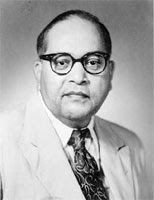
Dr. Ambedkar was the main architect of the Indian Constitution. He was born in a very poor low caste family of Madhya Pradesh. In U.S.A., he did his M.A. in 1915 and Ph.D. in 1916. From 1918 to 1920, he worked as a Professor of Law. Dr. Ambedkar set up his legal practice at the Mumbai High Court.
Ambedkar was the main inspiration behind the inclusion of special provision in the Constitution of India
for the development of Schedule Caste people. Dr. Ambedkar was the Law Minister of India from 1947 to 1951. He took part in the Satyagraha of untouchables at Nasik in 1930 for opening the Hindu temples to them.
Dr. Ambedkar was emancipator of the 'untouchables' and crusader for social justice. This liberator of the down trodden was affectionately called "Babasaheb". He was posthumously awarded 'Bharat Ratna' in the year 1990.
Thursday, December 11, 2008
Dr. B.R. Ambedkar : Man of Millennium for Social Justice
 This book discusses the assumption that Bharat Ratna Babasaheb Dr. B.R. Ambedkar, the Chief Architect of Constitution of India, is the man of millennium for social justice, in the sense that he became the deliverer of or the Messiah of the Dalits, the erstwhile untouchables, Other Backward Classes (OBCs), and women, constituting 95% of Hindu population. That big segment of population had been forced to live at a sub-human level from time immemorial, under caste system, sanctioned by Hindu scriptures.
First installment of human rights to the most wretched section was caused to be given by Ambedkar in 1932, through Poona Pact signed between him on behalf of Dalits and Madan Mohan Malviya, on behalf of Hindus. He completed the remaining job through Constitution of India of which he became the Chief architect.
Another assumption is that the scope of freedom struggle led by Mahatma Gandhi, Father of Nation, and his Congress was limited to the objective of securing transfer of power to only upper castes, on the pattern of Hindu scriptures, and therefore they had barred the social questions from being raised on Congress platform.
Final assumption is that Ambedkar is the man of millennium for social justice, since he was the first man in history to successfully lead a tirade of securing social justice to the vast sections of Indian humanity, with the help of a law, which practically repealed the concerned portions of Hindu scriptures.
Contents: Preface. I. Preliminary: 1. Bug man of millennium. II. Search for greatest of the great: 2. Search for greatest of the great. 3. Test of greatness. 4. Test of vilification : tie between Gandhi and Ambedkar. 5. Difference between vilification of Gandhi and Ambedkar. III. Planning strategy against Ambedkar: 6. Vicariously hitting real targets. 7. When reason has to face the unreasonable. 8. Choosing time of attack on Ambedkar. 9. One adversary made measuring rod for another. IV. Media reaction for and against vilification: 10. Politically incorrect hand granade tossed. 11. Dalits need another struggle for freedom. 12. Wildly polemic and incorrect campaign of vilification. 13. Bringing order in house of disorder. V. Ambedkar-haters in dock: 14. Wages of Ambedkar Bashing. 15. Unseemly tool of Hindu fundamentalists. 16. Arun Shourie and Nathuram Godse : a comparison. VI. Ambedkar search for alternatives: 17. Ambedkar on Hindu attitude to problem of caste. 18. Ambedkar on annihilation of caste. 19. Ambedkar on Shakti and Kaliyuga. 20. Ambedkar's search for alternative to Varnavyavastha. VII. Ambedkar and Hindu traditionalists: 21. Mind of Ambedkar. 22. Unexplained silence over Ambedkar's analysis of scriptures. 23. Kaamdhenu : Permanent Bone of contention. VIII. Ambedkar and social justice: 24. Social justice in India and plight of weaker sections. 25. First organised attempt for restoring social justice. 26. Gandhi and social justice. 27. Communism and social justice. 28. Ambedkar and social justice. IX. Dr. B.R. Ambedkar man of millennium for social justice: 29. Nation's appreciation for Ambedkar. 30. Ambedkar in eyes of contemporary celebrities. 31. Ambedkar in Hindu mythological context. 32. B.R. Ambedkar : India's man of millennium for social justice. Conclusion. Bibliography. Index.
Wednesday, December 10, 2008
Ambedkar – A Life Devoted To Uplifting The Oppressed

On 26th November 1949 the constitution of India was approved by the Constituent Assembly. Ambedkar’s next move was to introduce a Hindu Code Bill with the support of Prime Minister Jawaharlal Nehru, but the bill had to be withdrawn on being opposed vehemently by the Hindu members. And consequent to the debates on it, Ambedkar resigned from the Union Cabinet. He contested for the Lok Sabha (Lower House of the Indian Parliament) in the elections of 1952, but could not make it. But he was elected to the Rajya Sabha, the upper house. He contested for the Lok Sabha again, in 1954, but was defeated.
On 14th of October 1956 Bhim Rao Ambedkar, the architect of India’s Constitution embraced Buddhism along with thousands of his followers at Nagpur. HE died in the night of December 1956.
His important works: The Untouchables, The Buddha and Karl Marx, Revolution and Counter Revolution in India, The Buddha and his Dharma. The writings of Dr. Ambedkar have been published later in several volumes. He is being venerated all over India as the greatest champion of the causes for India’s constitutionally scheduled castes and tribes or the Dalits as they are called now.
Tuesday, December 9, 2008
The Ambedkar Death Anniv Headache

By: Varun Singh Date: 2008-12-06
As the city gears up to celebrate Dr B R Ambedkar's 52nd death anniversary today, residents of Shivaji Park have barricaded their buildings and will remain locked up for most part of the day. Some residents have even moved base temporarily to far-flung suburbs for the day.
They have no option, say residents thanks to the followers of Babasaheb Ambedkar, who have begun pouring in from across the country to pay tribute the great leader. The gathering, as usual, will be held at the Chaityabhoomi at Shivaji Park.
According to residents, the huge crowd that congregates in the area makes a huge ruckus and leaves behind a mess. R R Iyer a resident of Asha building, said that most of his neighbours have already moved out. "The noise is unbearable. People defecate all over the park and it's impossible for residents to walk in the area," said Iyer.
Puja Patke, is camping with relatives at Borivli. "It's impossible to stay in Shivaji Park on December 6. The roads are filled with people, and you will find somebody urinating at every other place here," said Puja.
Varsha Bole is more stoic. She has taken leave from work and plans to hold fort at home. "The entire area is packed with people from the previous night. It's impossible to venture out. It's an unofficial holiday for most residents of Shivaji Park," said Varsha. Shop owner Uday Chavan, visits Shirdi on this day. "My shop is closed on December 6, and I take the opportunity to go for a religious trip," he said.
Subscribe to:
Posts (Atom)

